


2026 Historic Bar, Saloon, & Lounge Guide
The Southern Nevada Territory holds one of the most layered drinking histories in the American West, with a lineage that runs from Prohibition-era speakeasies hidden behind casino floors to Rat Pack hideaways, Hoover Dam-era roadhouses, and the last surviving saloon from a vanished mining boomtown. Across the region, that history survives in wildly different forms, whether in polished basement lounges built into landmark hotels, neon-lit casino bars that have poured drinks continuously for a century, or remote desert taverns where the bullet holes are as original as the floorboards. The LVT Historic Bar, Saloon, & Lounge Guide gathers the dates, details, and insider context needed to experience these landmarks with the depth they deserve, across all eight regions of the Territory.
Pick a Territory
Las Vegas
Downtown Las Vegas
Henderson
Boulder City
Primm–Jean–Goodsprings
Moapa Valley
Mesquite
Laughlin
Territory Tips
- Many of the oldest bars in the Territory predate modern payment infrastructure by decades and some rural establishments remain cash-preferred; carrying physical currency avoids friction where card readers are unreliable or absent.
- Nevada strictly enforces 21-and-older entry at bar and lounge areas, even where an attached restaurant or casino floor is open to all ages; confirming a venue's age policy in advance prevents turned-away arrivals, particularly at properties with mixed-age dining rooms.
- Desert temperatures swing dramatically after sunset, and several of the most historic stops in the Territory, including Goodsprings, Overton, and the high desert corridors between Boulder City and Laughlin, sit well outside city services; a jacket, a full tank of gas, and a plan for the return trip are worth confirming before departure.
- Many of these establishments' most compelling details, including bullet holes, hidden safes, celebrity booths, and original architecture, are easy to miss without knowing where to look; asking a bartender or staff member for the history is rarely an imposition and often the best way to see it.
Las Vegas Historic Bar, Saloon, & Lounge Guide
Peppermill Restaurant and Fireside Lounge
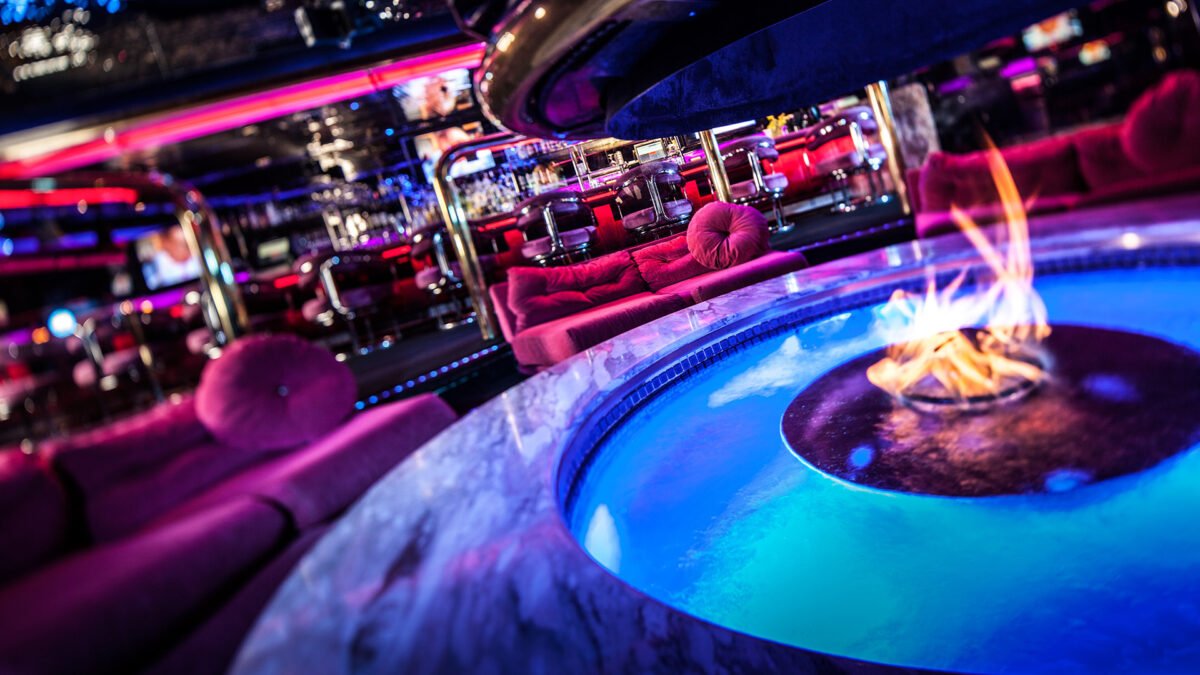
History: Opened in 1972, the Peppermill is a Las Vegas restaurant and lounge built around a theatrical, retro-futurist take on Old Vegas, with Tiffany-style flamingo lamps, mirrored walls, and plush blue booths, while the adjoining Fireside Lounge centers on a fire pit ringed by a water feature and colored lighting. Elvis Presley, Dean Martin, Jerry Lewis, and Frank Sinatra were regulars, and the interiors have appeared in Casino, Showgirls, The Cotton Club, and CSI.
The lounge is known for its oversized 64-ounce Scorpion cocktail, a shareable pour built for lingering fireside, while the restaurant’s longstanding menu includes the French Toast Ambrosia, Fresh Fruit Salad, and Peppermill Burger. In 2024, the Peppermill received a James Beard Foundation America’s Classics Award, recognizing it as a beloved, locally owned institution. Five decades on, the theatrical decor, the oversized cocktails, and comfort food served at any hour of the day or night still pull in the same mix of regulars and first-timers that made the Peppermill a Vegas institution in the first place.
Best for retro Las Vegas atmosphere, oversized cocktails, late-night dining.
Planning Notes:
- Open Mon–Wed 7 AM–2 AM; Thu–Sun 24 hours.
- Free on-site parking.
- Visit after dark for the full fire-pit, neon, and mirror effect.
- Happy hour daily 3–6 PM; a reverse happy hour also runs nightly, with hours varying by day.
- Nonalcoholic mocktails and premium ice-cream drinks available; fire-pit seating suits drinks better than a full meal.
- ADA Information: Low fire-pit seating can be difficult for some wheelchair users to transfer into.
Stage Door Casino
History: Opened in 1976 directly across Flamingo Road from the original MGM Grand performers’ entrance, Stage Door took its name from that proximity and quickly became an off-duty hangout for entertainers. Sinatra’s entourage were regulars, along with Steve and Eydie Gormé and boxer “Smokin'” Joe Frazier. “The Sinatra,” the bar’s signature drink featuring a bottle of Jack Daniel’s Sinatra Select served with ice on the side, keeps that connection alive.
Stage Door remains one of the last true dive bars on the Strip, small and unpretentious, with the bar at its center rather than the casino floor. Video poker and slots, a jukebox, cheap drinks, a famous hot-dog-and-beer deal, and a 24-hour liquor and convenience store next door add to its nostalgic appeal. As the Strip around it keeps getting more polished, the enduring character of Stage Door only stands out more.
Best for authentic old Vegas dive-bar atmosphere, cheap drinks, people-watching just off the Strip.
Planning Notes:
- Open 24/7
- Free on-site parking
- No cover for football and hockey game days
- ADA Information: Compact bar can be hard to navigate when crowded.
Dino's Lounge
History: Opened in 1953 by Eddie “Gentleman Gangster” Trascher as Ringside Liquors, the bar was acquired in 1962 by Rinaldo Dean “Dino” Bartolomucci and renamed Dino’s Lounge in 1969; the “Getting Vegas Drunk Since ’62” motto marks that transition.
The bar remains family-owned today, and is celebrated as one of the oldest neighborhood bars in Las Vegas, one of its most authentic dive bars, and “The Last Neighborhood Bar.” The Drunk of the Month competition, with nominees chosen by bartenders, rewards a regular with a T-shirt and a portrait on the wall, along with the chance to advance to Drunk of the Year. PBR is woven into the experience through a signature game in which patrons guess the playing-card suit hidden beneath a bottle cap before opening it, winning the beer for free if they guess correctly. Dino’s dark, uncontrived interior features a long bar, ceiling tiles hand-painted by decades of regulars, and vintage neon documented by UNLV and The Neon Museum. Karaoke is a signature draw, even inspiring Chris Martin from Coldplay in 2024 to famously join the rotation in disguise and film part of the music video for “All My Love.” The bar also appeared in the 2007 film Lucky You. Dino’s has stayed a fixture of the neighborhood bar scene for decades precisely because none of it feels scripted.
Best for authentic dive-bar atmosphere, late-night karaoke, genuine neighborhood Vegas.
Planning Notes:
- Open 24/7
- Free on-site parking
- Karaoke Thu–Sat from 10 PM; arrive early for the rotation
- Graveyard drink specials Sun–Wed, midnight–8 AM
- No kitchen; local food trucks cover late-night food
- ADA Information: Intimate, older layout can be tight when crowded.
The Sand Dollar Lounge
History: Opened in 1976 as the Sand Dollar Blues Bar, this is one of the most important surviving music venues in Las Vegas and a direct link to the 1970s blues scene in the city. Muddy Waters and B.B. King have both performed on the Sand Dollar stage, and Mick Jagger was a known visitor.
The intimate room centers on live blues, rock, soul, and jazz, paired with an extensive whiskey selection, freshly made in-house pizzas, and an award-winning cocktail menu. The music theme carries into the cocktail menu, where house-infused syrups create inventive drinks named after well-known blues and rock songs, including long-standing staples like “Witchy Woman.”
The venue transforms twice a year for the Nightmare on Spring Mountain event in October and the Miracle on Spring Mountain event during the holidays, pulling guests into fully immersive pop-ups packed with over-the-top decor and custom themed menus. The stage hasn’t lost its thread back to the 1970s blues legends who once played it, which is proof the Sand Dollar is still living history, not a themed recreation.
Best for live blues, rock, and soul in an authentic, unpolished music-bar setting.
Planning Notes:
- Open Mon–Sat 4 PM–4 AM; Sun 8 PM–4 AM
- Free on-site parking, though it can get busy during peak hours
- Best visited when a desired band is playing; seating fills fast
- ADA Information: Layout can be tight during live shows; confirm needs ahead.
Golden Steer Restaurant
History: Opened in 1962, the Golden Steer built its refined steakhouse dining experience by pairing formal service with a vintage Victorian ambiance left behind by Valentino’s, the restaurant that occupied the space prior. Distinct copper chandeliers and deep leather booths quickly attracted a clientele of the biggest entertainers in Las Vegas. The Golden Steer provides a direct link to the Rat Pack era, when Frank Sinatra, Dean Martin, and Sammy Davis Jr. were frequent regulars; their preferred corner booth is still preserved for guests. Elvis Presley, Nat King Cole, and mob-affiliate Tony Spilotro were also well-known patrons.
The fine dining traditions continue today, with Caesar salad, prepared with exceptional showmanship, and dramatic flaming desserts like Bananas Foster and Cherries Jubilee. At the bar, oversized 1960s-style martinis and Manhattans echo the era’s sense of occasion, alongside the signature Golden Steer cocktail, a blend of cognac, white peach, lemon, and sparkling wine. A 2023 expansion, the first in nearly 50 years, uncovered and restored the building’s original brick and stonework. Unbroken operation since 1962 is rare enough on its own; keeping the ceremony intact the whole time is rarer still. Together, that’s what makes the Golden Steer feel like a genuine institution, and one of the last places in the city where a night out still comes with real ceremony.
Best for Rat Pack history, classic steakhouse dining and cocktails.
Planning Notes:
- Open daily 4:30–9:45 PM, last seating
- Free on-site parking, though it fills quickly
- Arrive near opening for the best opportunity to get seating at the bar
- 15-minute grace period for reservations before cancellation; arrive early to allow time for parking, or use rideshare
- Full dinner menu available at the bar, but not tableside presentations
- Four themed private dining rooms are worth asking about for groups, including The Mob Room, Western Lounge, Gambler's Den, and The Armory
- Smart-casual dress code enforced; closed-toe shoes required for men
- ADA Information: Fully compliant; contact the restaurant ahead for specific needs
Downtown Las Vegas Historic Bar, Saloon, & Lounge Guide
Bar Prohibition! at Golden Gate Casino
History: Operating since the 1906 opening of the Hotel Nevada, now the Golden Gate Hotel & Casino, Bar Prohibition! stands as the oldest surviving casino bar in downtown Las Vegas. The historic venue evolved from a rugged Wild West saloon into a Rat Pack-era hangout for Frank Sinatra, Dean Martin, and Sammy Davis Jr., staying open through federal Prohibition by keeping liquor flowing despite the ban. Renamed Bar Prohibition! in 2013 to mark the 80th anniversary of the 21st Amendment, it retains 1940s plaster ceilings and a ceiling mirror recalling the casino’s original overhead surveillance post, once reached by a concealed ladder to watch for cheats. A hallmark of the property is its collection of ten original 1906 hotel rooms, preserved as living history that guests can still reserve today.
The cocktail menu features a curated selection of inventive house creations paired with timeless, era-defining classics like their signature Rat Pack Manhattan. The Golden Gate also housed the first telephone in Las Vegas, installed in 1907 and issued the phone number ‘1,’ which is still on display in the lobby. Saloon, Prohibition-era holdout, and Rat Pack hangout, Bar Prohibition! carries more than a century of Golden Gate history in its name, which is reason enough to make it a stop before or after a night out.
Best for Rat Pack history, classic cocktails, Fremont Street energy.
Planning Notes:
- Open 24/7
- Free self-parking is available to hotel guests only; complimentary valet parking is available at the hotel entrance
- Daily open-bar happy hour 6–7 PM, wristband required from Club One desk starting at 4 PM
- The High Limit Room contains a small window with a knob that opens to reveal an original 1906 brick wall
- Whiskey bottles hidden in the walls during Prohibition were later found during renovations; ask staff where they're displayed
- ADA Information: Confirm access needs; the bar sits within an active casino floor
Atomic Liquors
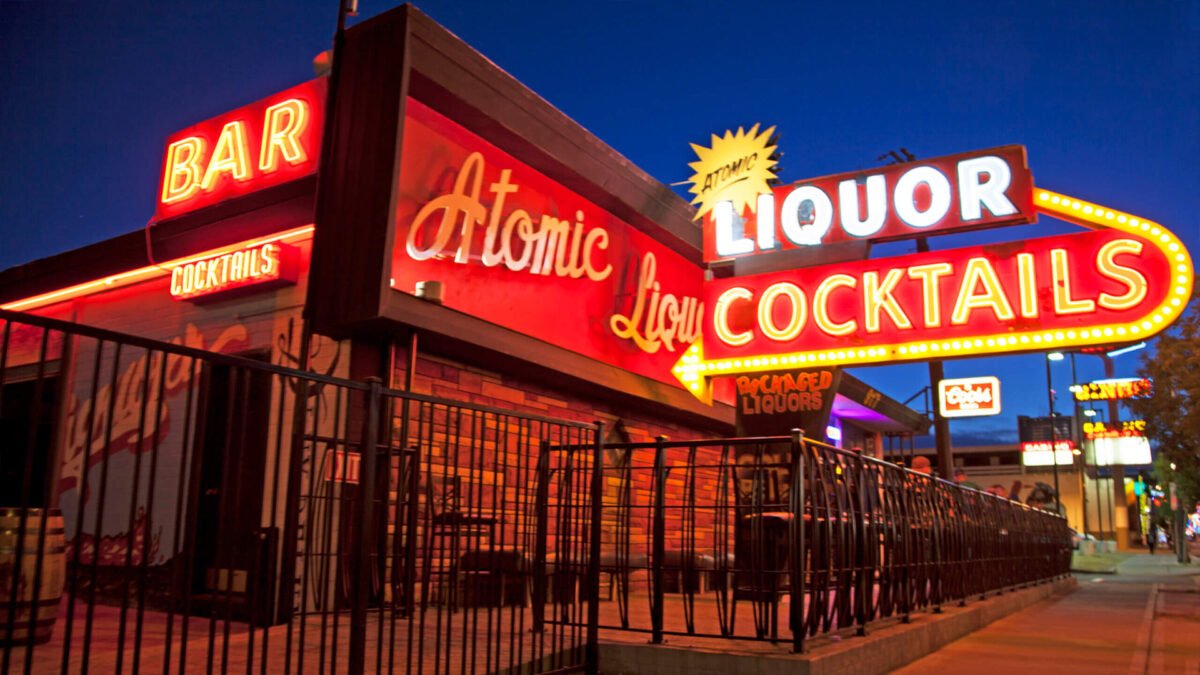
History: Open since 1954, Atomic Liquors grew out of Virginia’s Café, a 1940s diner where owners Joe and Stella Sobchik began serving rooftop “atomic cocktails” so patrons could watch nearby nuclear tests. The novelty helped carry the business into its new identity as the oldest surviving freestanding bar in Las Vegas. Atomic Liquors held Tavern License No. 00001, the first license allowing alcohol service outside a hotel or casino. Regulars included the Smothers Brothers, Clint Eastwood, Frank Sinatra, Dean Martin, Sammy Davis Jr., Peter Lawford, Joey Bishop, and Barbra Streisand, whose reserved bar stool remains today. The vintage character of Atomic Liquors has also made it a recognizable filming location, appearing in The Twilight Zone, The Gauntlet, Casino, and The Hangover. Signature drinks include the bourbon-based “Hunter S. Mash,” honoring frequent customer Hunter S. Thompson, and the “Atomic Bourdaini,” a Negroni twist honoring Anthony Bourdain.
The bar also offers an acclaimed craft sour beer program and elevated dive food, highlighted by its popular Sunday Supper, which pairs a rotating comfort meal with a craft beer. Atomic-age lore hasn’t turned Atomic Liquors into a tourist stop, as the craft cocktail program keeps it firmly a neighborhood bar that regulars still claim as their own.
Best for atomic-age history, craft cocktails, authentic Downtown dive pedigree.
Planning Notes:
- Open Mon–Thu & Sun noon–2 AM; Fri–Sat noon–3 AM
- Free on-site parking, though the lot fills quickly; free street parking is also available
- Weekday happy hour 4–7 PM
- The unique historical features worth seeing include a vintage 1950s floor safe and Geiger counter displayed under glass, as well as the "Joe’s" and "Stella’s" restrooms named after the founders
- Patio available for additional seating
- ADA Information: Compact, historic interior; confirm accessibility needs ahead
The Parlour at El Cortez
History: Opening in 1941, the El Cortez Hotel & Casino was briefly owned by mob figures Bugsy Siegel and Meyer Lansky, along with mob-affiliates Moe Sedway and Gus Greenbaum. Casino icon Jackie Gaughan bought it in 1963 and ran it for 45 years, living in the hotel’s penthouse until his death in 2014. The casino preserves that lounge tradition today through The Parlour, where generous pours, bargain drink and appetizer specials, and a lineup of signature martinis complement bar-top gaming and live performances by vintage-Vegas vocalist Michael Ross Nugent. On the ground floor, a dedicated history hallway curated by The Mob Museum pairs a public gallery of rare photographs with archives documenting the deep mob roots of the property and city. Just upstairs, a separate vintage corridor features Havana-style Cuban artwork that honors the mob’s early gambling operations in Cuba, leading staying guests directly to the doors of the 47 original 1941 rooms. The El Cortez became the first operating casino listed on the National Register of Historic Places in 2013, and has appeared in The Hangover, Vega$, and Ellie Goulding’s “On My Mind” music video.
Mob ownership and decades of Gaughan’s stewardship built the layered history still shaping the room today, and The Parlour is the best place to feel that history firsthand.
Best for vintage Downtown atmosphere, live entertainment, and a direct link to the mob era at El Cortez.
Planning Notes:
- Open daily 10 AM–1 AM
- Free self-parking is available to hotel guests only; complimentary valet parking is available at the hotel entrance
- Daily happy hour 5–7 PM
- Live music Wednesdays 5–9 PM, schedule can change
- On-site restaurant Siegel's 1941 leans into the mob history with a Meyer Lansky burger and mob memorabilia
- ADA Information: Accessible entrances, parking, and elevator access
Henderson Historic Bar, Saloon, & Lounge Guide
Iron Rail Café at Railroad Pass Casino
History: Opened in 1931, Railroad Pass is the oldest continuously operating casino in Nevada. The casino was built just outside the dry federal reservation surrounding Boulder City to serve off-duty Hoover Dam workers. Holding Nevada gaming license No. 4, the property has the oldest active license in the state. Licenses Nos. 1 and 2 were never issued, while the holder of license No. 3 went out of business decades ago. During Prohibition, the venue operated a hidden speakeasy behind its legitimate casino storefront, where guests who whispered the secret password “gaiety” could order brandy drawn from a 55-gallon drum, diluted and mixed with custom fruit flavors. Long before the modern five-story hotel tower was added in 1986, the establishment had built a reputation as a lively “sin city” outpost where workers could spend their paychecks on gambling, illegal booze, and live music.
Today, that long-standing emphasis on food, drink, and round-the-clock hospitality continues at the 24-hour Iron Rail Café, where generous-value classics like the 3 Deuces breakfast and strawberry shortcake are served alongside a full bar offering beer, wine, and cocktails, while the original architectural character survives in the building’s distinct high ceilings and arched roof structure. Food, drink, and hospitality never really stop here, which is exactly why Iron Rail Café still feels like the original heart of Railroad Pass.
Best for Boulder Dam-era history, Prohibition-era stories, a genuine slice of old Nevada gaming culture.
Planning Notes:
- Open 24/7
- Free on-site parking
- The dedicated memorabilia room, tucked just off the gaming floor, preserves historic photographs, early artifacts, and an original payday bank safe, and is easy to miss but worth seeking out
- Convenient stop when combining with Hoover Dam, Boulder City, or Lake Mead
- ADA Information: Accessible parking and casino access
Gold Mine Tavern
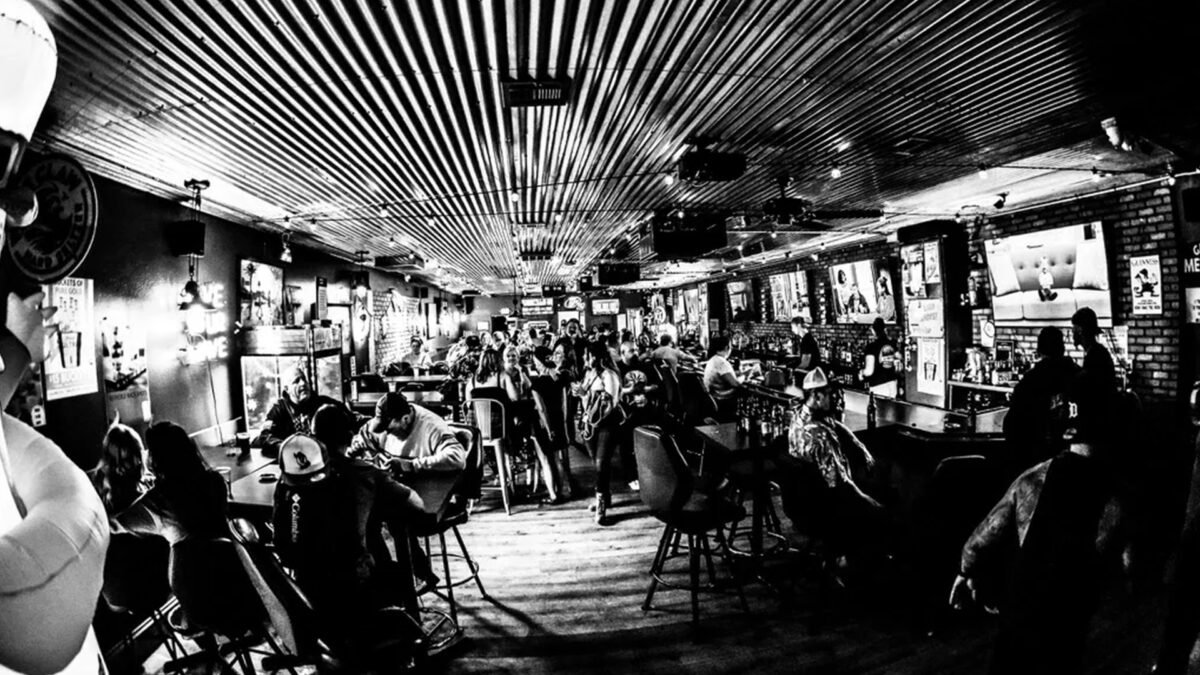
History: Open since 1965, the Gold Mine Tavern is the oldest surviving bar in Henderson, located in the historic Water Street District. The establishment features an 80-foot wooden bar, video poker gaming, and a vintage neon sign.
The tavern marked its 60th anniversary in 2025 and hosts no-cover live music spanning rock, blues, funk, and country on its outdoor patio every Friday and Saturday night. A reputation for generous pours and affordable drinks has made the Gold Mine one of the top 50 Jameson-selling venues in Nevada, an unlikely distinction for a neighborhood tavern of its size. A well-worn bar, a loyal local crowd, and weekend live music may not sound like much on paper, but six decades in, that’s still all the Gold Mine needs to remain a fixture of the Water Street District.
Best for live local music, patio entertainment, old Henderson bar culture.
Planning Notes:
- Open 24/7
- Free street and lot parking along Water Street
- Happy hour daily 2–6 PM, plus an overnight reverse happy hour
- Live music Fri–Sat, generally from 8 PM; arrive early for popular shows
- Patio is a primary performance space, not just overflow seating
- ADA Information: Interior and patio can be tight during live shows
Boulder City Historic Bar, Saloon, & Lounge Guide
Backstop Sports Pub
History: Constructed in 1931 by Hoover Dam workers as a recreation hall, the building has anchored the social fabric of Boulder City for more than nine decades. The site first became associated with drinking through Laubach’s Amusement Palace, where beer and wine were served after Prohibition was repealed, and it passed through several names before becoming Backstop Sports Pub. Those early years unfolded under unusual restrictions. Alcohol sales were prohibited within the federal reservation, beer and wine did not become legal until 1943, and full liquor sales remained prohibited until 1969. Through those changes, the location remained a gathering place for the working-class community that built and sustained the town.
Today, Backstop is known for its full bar, affordable beers and well drinks, daily happy hour, pool tables, and a steady lineup of live music, karaoke, comedy, and other entertainment, all in a classic sports-pub atmosphere. Yet it also preserves one particularly memorable piece of its history. A 1950s promise called for a free drink on any day the sun failed to shine. Few bars in town can claim Hoover Dam-era roots, a patchwork of changing liquor laws, and decades as the neighborhood’s default gathering spot. Fewer still back a standing bet against the Nevada sun. Together, it adds up to a character no other bar in town can match, and a good reason to check the sky before ordering.
Best for Hoover Dam-era history, live music, and unpretentious neighborhood-bar culture.
Planning Notes:
- Open Sun–Thu 8 AM–1 AM; Fri–Sat 8 AM–2:30 AM
- Free street and lot parking along Arizona Street
- Cash only
- Smoking permitted indoors and outdoors
- Happy hour daily 3–6 PM, not offered during live music
- Live music/dancing Fri–Sat from 9:30 PM; karaoke Tuesdays 7–11 PM; comedy Mondays, seating at 9 PM with the show at 9:30 PM
- Thursday pool tournaments begin at 6 PM; Sunday offers free pool from 5 PM until close
- ADA Information: Compact, older layout can be tight when crowded
Cleveland's The Lounge at the Boulder Dam Hotel
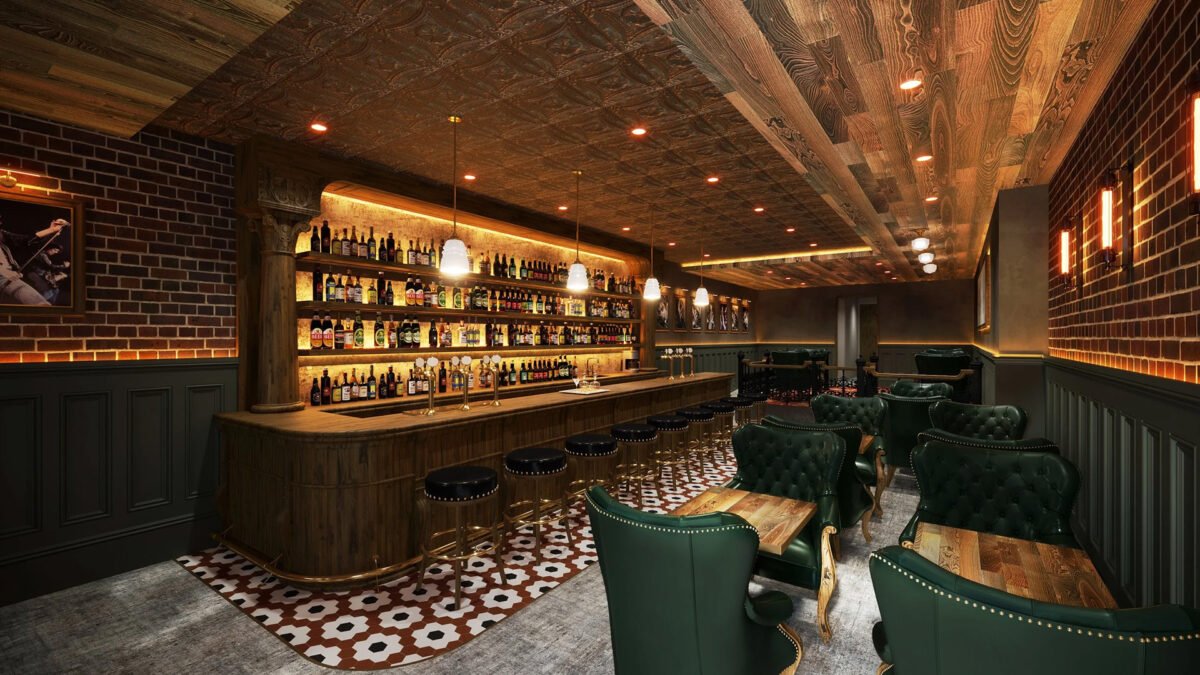
History: Opened in 2019 in the basement of the 1933 Boulder Dam Hotel, Cleveland’s The Lounge operates as a modern speakeasy-style venue rather than a surviving Prohibition-era bar. The historic hotel above it was the first hotel in Nevada to be added to the National Register of Historic Places, earning that distinction in 1982. Over the decades, the hotel built a notable reputation by hosting high-profile guests including Shirley Temple, Howard Hughes, Bette Davis, Will Rogers, and honeymooning Cornelius Vanderbilt Jr.
Today, the basement bar draws heavily on that mid-century heritage while creating a space designed for conversation. There are no television screens, and the intimate room uses low lighting, custom Art Deco wall murals, and Tiffany glass fixtures to evoke the atmosphere of a private 1920s lounge. Handcrafted cocktails, including its Citrus-Irish Whiskey Punch, and regular live jazz performances complete the experience. No televisions, low light, and a room built for conversation set Cleveland’s apart from other historic drinking spots in Boulder City, and make the trip downstairs worth it for a quiet drink away from the crowds.
Best for intimate cocktails and live music inside a genuinely historic 1930s hotel.
Planning Notes:
- Open Mon–Thu 4:30–9 PM; Fri–Sat 4:30–11 PM; Sun 11 AM–5 PM
- Free on-site parking
- Reservations recommended for live performances and larger parties
- Basement stays notably cooler; a good hot-afternoon stop
- ADA Information: Confirm basement access and seating ahead
Skinny Bar
History: Opened in early 2024, Skinny Bar is an intimate 1930s-style lounge featuring craft cocktails, live music, and a historic arched bar as its centerpiece. According to its owners, the bar dates to the late 1800s and was crafted from Scandinavian white oak in Norway before being shipped to Ogden, Utah, and eventually installed at the Stagecoach Saloon, long remembered locally as a rowdy Boulder City establishment. When the Stagecoach closed around 2008, the fixture was tracked down at a trailer park and salvaged. Restoring the bar required digital scanning so replacement pieces could be carved from fresh white oak to complete the relic.
The main room features hand-cut and stained wood ceilings designed to enhance acoustics for stand-up comedy and podcasting as well as musical performances. The cocktail menu draws on the era of the centerpiece bar, reviving pre-Prohibition standards such as the Tuxedo alongside modern house creations. The venue also includes The Cement Slipper, a separate rooftop tiki bar accessed through the rear alley that serves tropical drinks on select nights and takes its tongue-in-cheek name from mob tropes. A genuine 19th-century bar serves as the centerpiece at Skinny Bar, salvaged and rebuilt board by board, the kind of pedigree most period-style lounges can only fake, and exactly what ties this brand-new room to genuine Boulder City history.
Best for a tangible piece of Boulder City bar history, craft cocktails, intimate live shows.
Planning Notes:
- Open Wed–Thu 4–11 PM; Fri–Sat 4 PM–1 AM
- Free street parking is available along Nevada Way
- Thursday open-mic nights offer a local, low-key visit
- The Cement Slipper runs select nights only; check the schedule
- No regular food service
- ADA Information: Intimate space can be tight during performances
Boulder Dam Brewing Company
History: Opened in 2007, family-owned Boulder Dam Brewing Co. is a deliberate recreation of 1930s Boulder City rather than a historic survivor. Interior details and millwork draw on the design of the town’s early construction era, while the property combines an indoor pub with a dedicated beer garden. With assistance from the city, the brewery acquired and displayed dozens of authentic Hoover Dam construction tools and pieces of heavy equipment throughout the property, giving the period-inspired setting a genuine connection to the dam’s construction. The microbrewery carries that history into its draft selection, naming house beers after historical job titles and site terminology, including its Powder Monkey Pilsner.
A full pub-food menu rounds out the beer selection with everything from starters to entrées. The beer garden also regularly hosts live music, particularly on weekend afternoons and evenings, giving the space a modern role as a community gathering place. Between the 1930s-inspired design, the authentic dam artifacts on display, the house-brewed beer, and a beer garden that fills up most weekends, Boulder Dam Brewing reads less like a themed restaurant and more like a living tribute to the workers who built the dam.
Best for Hoover Dam artifacts, locally brewed beer, family-friendly dining.
Planning Notes:
- Open Sun–Thu 11 AM–9 PM; Fri–Sat 11 AM–11 PM
- Free street and lot parking along Arizona Street
- The brewpub features 18 rotating taps, split between 6 on-site house styles and roughly 12 regional guest beers and ciders
- The Six-Shooter Sampler features 6 current house-brewed beers served in 5-ounce tasting glasses
- ADA Information: Indoor/outdoor seating in a relatively open, family-oriented setting
The Dillinger
History: Opened in 2011 inside a 1940s former Bank of Nevada building in Boulder City, The Dillinger pairs a surviving bank vault and original signage with a gangster-themed restaurant named for outlaw John Dillinger. The building’s heavy steel-reinforced concrete construction remains intact, while the original bank vault has been repurposed as cold storage and twin shotgun shells serve as custom door handles at the entrance.
Gourmet charbroiled burgers named for famous criminals anchor the menu, including the signature Dillinger, topped with cheddar, applewood-smoked bacon, and barbecue beef brisket. Other notable offerings include the Baby Face Nelson with baked brie and fig marmalade and the Sticky Burger with bacon, cheddar, and peanut butter. The food is complemented by outdoor patio tables inlaid with spent bullet casings and an extensive bar selection featuring regional craft beers and premium whiskeys. An authentic bank vault, surviving architectural details, and a gangster theme played completely straight are what separate The Dillinger from a typical novelty restaurant and tie it to genuine Boulder City history.
Best for gourmet burgers, whiskey, and dining inside a genuine former bank.
Planning Notes:
- Open Sun–Thu 11 AM–8:30 PM; Fri–Sat 11 AM–9:30 PM
- Free on-site parking is available
- Look for the original bank vault, now cold storage
- ADA Information: Wheelchair accessible, indoor and outdoor seating
Primm–Jean–Goodsprings Historic Bar, Saloon, & Lounge Guide
Pioneer Saloon
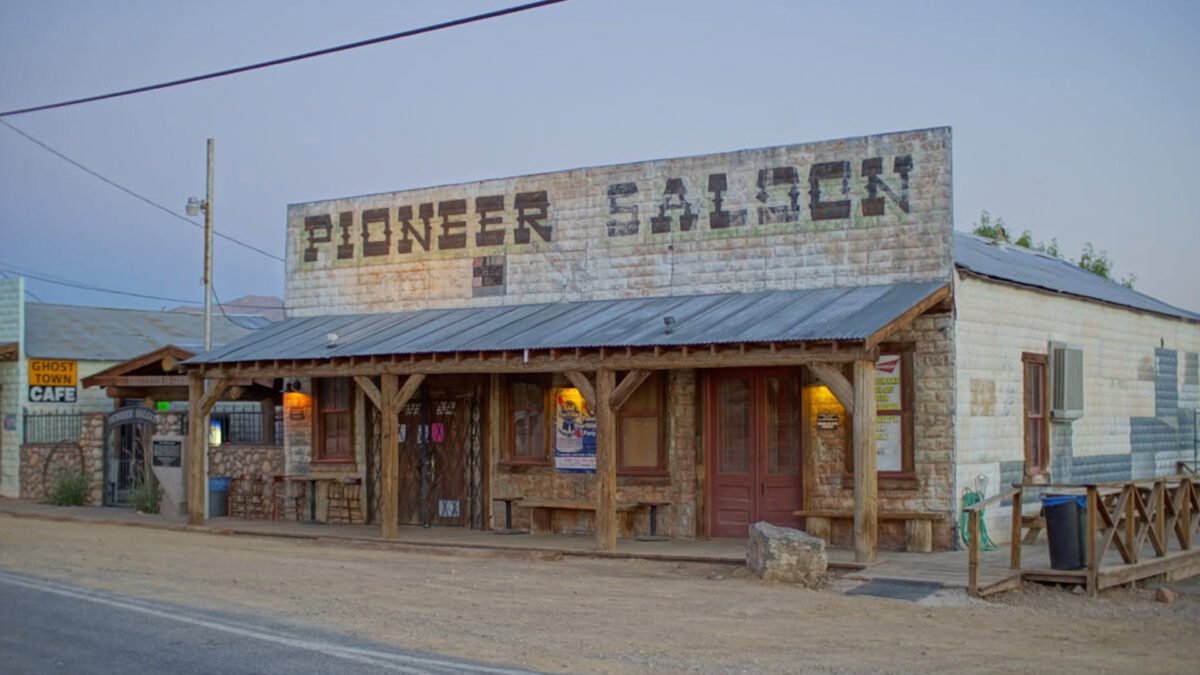
History: Built in 1913, Pioneer Saloon is the oldest surviving bar in Nevada and the last operating saloon from the Goodsprings mining boom. Original character remains remarkably intact throughout Pioneer Saloon, from the pressed-tin structure, likely ordered from a 1912–1913 Sears and Roebuck catalog, to the cherry-wood Brunswick bar and a potbelly stove said to date to the Civil War era. The bar was built in Maine, shipped around Cape Horn to San Francisco, hauled to the former mining town of Rhyolite, and finally transported to Goodsprings in 1913. More than a century later, the potbelly stove is still fired up during the cold winter months. Bullet holes remain from a fatal 1915 card game in which a miner was shot by a dealer after being caught cheating. Decades later, the saloon became linked to another tragedy. After Carole Lombard’s fatal 1942 plane crash on nearby Mount Potosi, Clark Gable waited here for days for news.
Today, a memorial room preserves photographs and wreckage from the crash. The saloon’s pop-culture legacy includes appearances in Fear and Loathing in Las Vegas, The Mexican, Miss Congeniality 2, Melvin and Howard, and Ghost Adventures, while Fallout: New Vegas recreated it in-game. The most-ordered item, the World-Famous Ghost Burger, comes topped with a secret Ghost Sauce recipe featured on Food Network and can be paired with the owner’s Old Man Liver American Whiskey or Busty Blonde Golden Ale. With more than a century of continuous operation, original fabric, mining-town history, and Hollywood and pop-culture connections, Pioneer Saloon remains one of the most significant historic drinking establishments in Nevada.
Best for Old West saloon history, film and pop-culture pilgrimage.
Planning Notes:
- Restaurant generally 11 AM–8 PM Mon–Thu, 9 AM–9 PM Fri–Sun; bar stays open later
- Free on-site parking is available
- Enter via the General Store side with kids
- Visit by day to appreciate the bullet holes and Lombard memorial display
- The adjoining Goodsprings General Store is worth combining with a visit, particularly for Fallout: New Vegas memorabilia and souvenirs
- Arrange transportation ahead; rideshare is unreliable in Goodsprings at night
- ADA Information: Older, compact interior; confirm access needs ahead
Moapa Valley Historic Bar, Saloon, & Lounge Guide
Red Rooster Bar
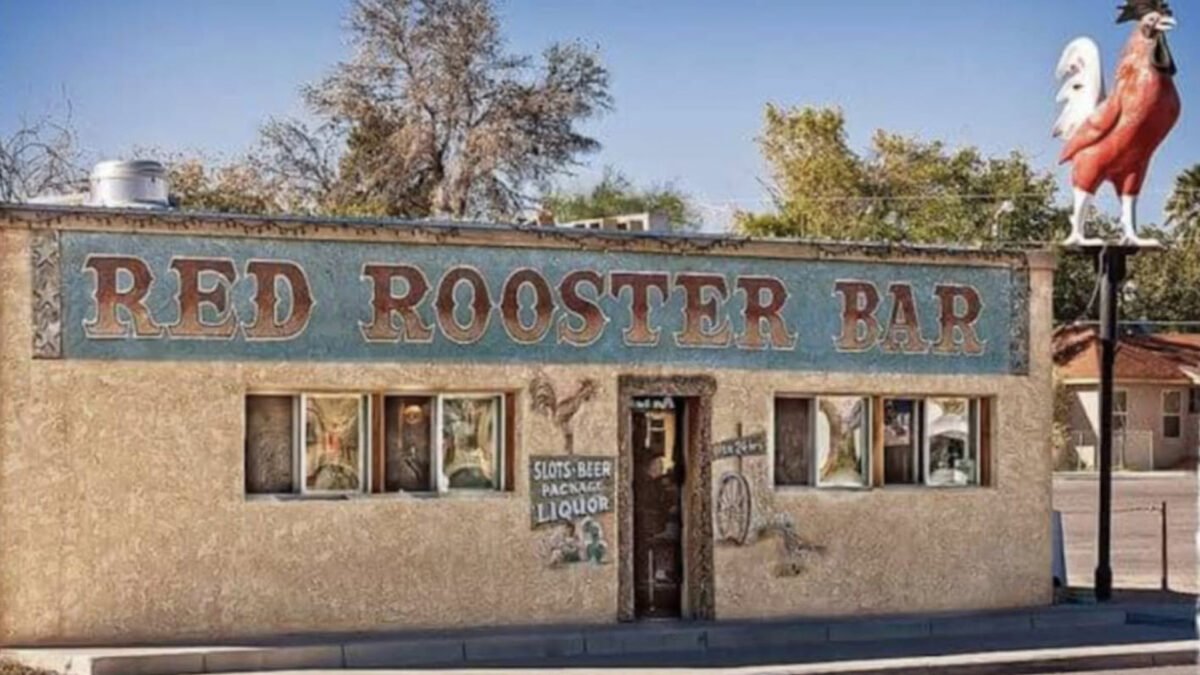
History: Operating since the late 1930s in Overton, the Red Rooster Bar is the oldest tavern in Moapa Valley and functions as a traditional small-town dive. The venue is recognized by the 8-foot tall fiberglass rooster on its roof, sourced from International Fiberglass, the same now-defunct manufacturer behind the country’s famous roadside “Muffler Men” statues. The original bird, which had stood for roughly 50 years, was destroyed in a 2020 windstorm and replaced in February 2022.
Inside, dim lighting and well-worn wood paneling keep the focus on a casual community environment, offering standard bar amenities including pool tables, video poker slot machines, and an affordable, straightforward liquor selection. Longevity and a lasting connection to the working communities of Moapa Valley make Red Rooster one of the area’s most historically significant surviving bars.
Best for authentic small-town dive-bar culture and the most recognizable landmark in Overton.
Planning Notes:
- Open 8 AM–midnight daily
- Free on-site parking
- Primarily a drinking/gaming stop; plan food elsewhere
- Within easy walking distance of other historic landmarks in Overton, including the Pioneer Theatre, a natural stop on a walking tour of old downtown Overton
- Convenient stop after visiting Valley of Fire State Park
- ADA Information: Compact, older layout can be tight when busy
Mesquite Historic Bar, Saloon, & Lounge Guide
Stateline Casino
History: Established in 1982 as Hop’s Stateline Casino by Warren “Hop” Hopkins and operating until 1984, the casino dates to a period when Mesquite was an unincorporated town of roughly 1,200 residents. As one of the earliest documented gaming establishments in the community, Stateline was part of the earliest wave that turned Mesquite into a regional gaming destination. Although the original operation later closed and the continuity of the property with the present-day casino is not fully documented, the Stateline name and Hopkins connection continued in local gaming records.
Today, Stateline Casino is a small, neighborhood-oriented operation that stands apart from the sprawling resort casinos in Mesquite. The venue features a 24-hour sports bar with slot machines and television screens, The Smoke Shack barbecue restaurant, pool tables, darts, karaoke, and an attached 12-room motel. The informal mix of gaming, food, entertainment, and lodging offers a glimpse of the local casino-bar culture that came before Mesquite grew into a major resort destination. For visitors looking to trade the resort slot floors for a more relaxed neighborhood atmosphere, Stateline remains an especially distinctive stop.
Best for early Mesquite gaming history, authentic small-town casino-bar atmosphere.
Planning Notes:
- Open 24/7
- Free on-site parking is available
- Friday pool tournaments; karaoke Tue & Fri; live music generally Saturday
- ADA Information: Confirm access and seating needs ahead
Golden West Restaurant & Casino
History: Established as the Golden West in 1995, the restaurant and casino occupies a 1920s adobe-brick building on the site of the original Mormon tithing lot in Mesquite. According to local lore, its 16-inch-thick walls have survived a string of earlier tenants, including the Hughes & Frehner Store, a post office beginning in 1926, and the Valley Inn Bar from 1960.
Today, the modest, locals-oriented casino carries that past forward with a full-service bar known for ice-cold beer and generous, friendly-priced pours, plus a long-running bartender tradition, including “Melanie’s Drink Special,” that draws regulars back every third Thursday. The adjoining diner-style restaurant is known for all-day breakfast and burgers locally regarded as some of the best in town. From tithing lot to neighborhood casino, Golden West has never really left its own history behind, which makes it a genuine slice of old Mesquite for anyone looking to pull up a barstool with regulars, rather than fight crowds along the resort corridor.
Best for small-town casino culture and locally loved diner food away from the resort corridor.
Planning Notes:
- Open 24/7; kitchen roughly 6 AM–10 PM
- Free on-site parking is available
- Smoking is permitted in the casino-bar area, which can get smoky
- The separate dining room is smoke-free and quieter, better suited for a sit-down meal
- ADA Information: Accessible parking, entrance, seating, and restrooms
Virgin River Casino & Lodge
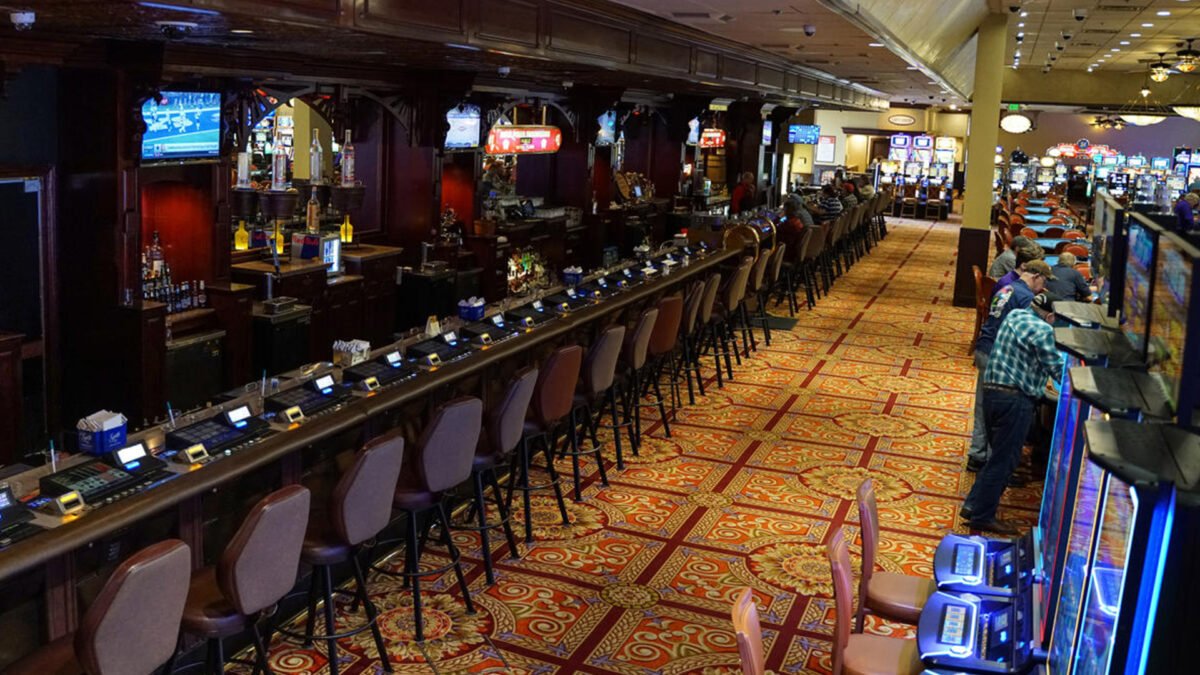
History: Opened in 1990, during a period when the population of Mesquite was only around 2,000 residents, the Virgin River Casino & Lodge helped launch a modern resort era for the town. The property initially debuted with 152 rooms before undergoing major expansions over the following decades to grow its footprint to over 700 rooms. At its grand opening, the resort heavily promoted its Long Bar as the ‘world’s longest bar,’ a continuous stretch of bar running through the casino and offering the clearest architectural link to the region’s early development boom.
Today, the property operates as a full-service destination featuring a 24-hour casino floor, a 24-lane bowling center, and the only live bingo hall in Mesquite alongside the historic bar area. Virgin River grew from 152 rooms to more than 700 without ever tearing out the Long Bar that opened alongside the first ones, which is what makes it still feel like a direct link to the earliest days of the casino boom in Mesquite.
Best for early Mesquite casino-resort history, casual drinks, and full-service resort amenities like bowling and bingo.
Planning Notes:
- Long Bar open 24/7
- Free self-parking is available on-site
- Visit during quieter hours if the bar itself is the priority
- The Virgin River Café and Sierra's Buffet offer convenient options for extending a visit beyond drinks
- ADA Information: Accessible parking, entrances, gaming areas, and restaurants
Laughlin Historic Bar, Saloon, & Lounge Guide
Losers' Lounge at Don Laughlin's Riverside Resort Hotel & Casino
History: Opened in 1966 as the Riverside Casino, Don Laughlin’s Riverside Resort is the oldest surviving casino in Laughlin and the property around which the town itself grew. Don Laughlin funded the purchase by selling his previous Las Vegas bar, the 101 Club, then converted a boarded-up, 8-room motel and bait shop into a small gambling hall featuring 12 slot machines, 2 table games, and 98-cent chicken dinners. The venue later expanded its entertainment options through Losers’ Lounge, a signature multi-level nightlife venue added in 1987 that features live music, dancing, and walls lined with irreverent memorabilia. Even the drink menu carries the theme, with Losers’ Signature Cocktails served as the house specialty alongside discounted well drinks and domestic beers. The resort also offers the riverfront Main Riverview Bar and the quieter Hideaway Martini Lounge. Don’s Celebrity Theatre, a live entertainment venue that has hosted legendary performers including Crystal Gayle, the Oak Ridge Boys, Vicki Lawrence, Leon Russell, Tony Orlando, and Debbie Reynolds, anchors live entertainment at the resort. Don Laughlin’s pioneering role, six decades of continuous operation, and entertainment venues that have never gone dark make Riverside the essential historic stop in town.
Best for the origins of Laughlin’s casino culture, riverfront drinks, and live music.
Planning Notes:
- Losers' Lounge open Thu–Sun only; live bands/DJs, hours vary by night
- Free self-parking is available on-site
- Main Riverview Bar for river views and sunsets; Hideaway Martini Lounge for quieter cocktails
- Friday line dancing runs 5–7 PM, free and open to the public
- The free classic-car museum on the resort grounds adds useful context on the role Riverside played in founding modern Laughlin
- ADA Information: Confirm convenient routes and seating locations ahead
Rush Lounge at Golden Nugget Laughlin
History: Opened in the late 1960s as the Bobcat Club, the property was originally established as the second casino in Laughlin. Early operator Oddie Lopp later remade the venue into the Nevada Club, managing a ferry service across the Colorado River from Bullhead City to transport Arizona-side patrons to his establishment. The historic site underwent a major transition when it was acquired and rebranded as the Golden Nugget Laughlin in 1988.
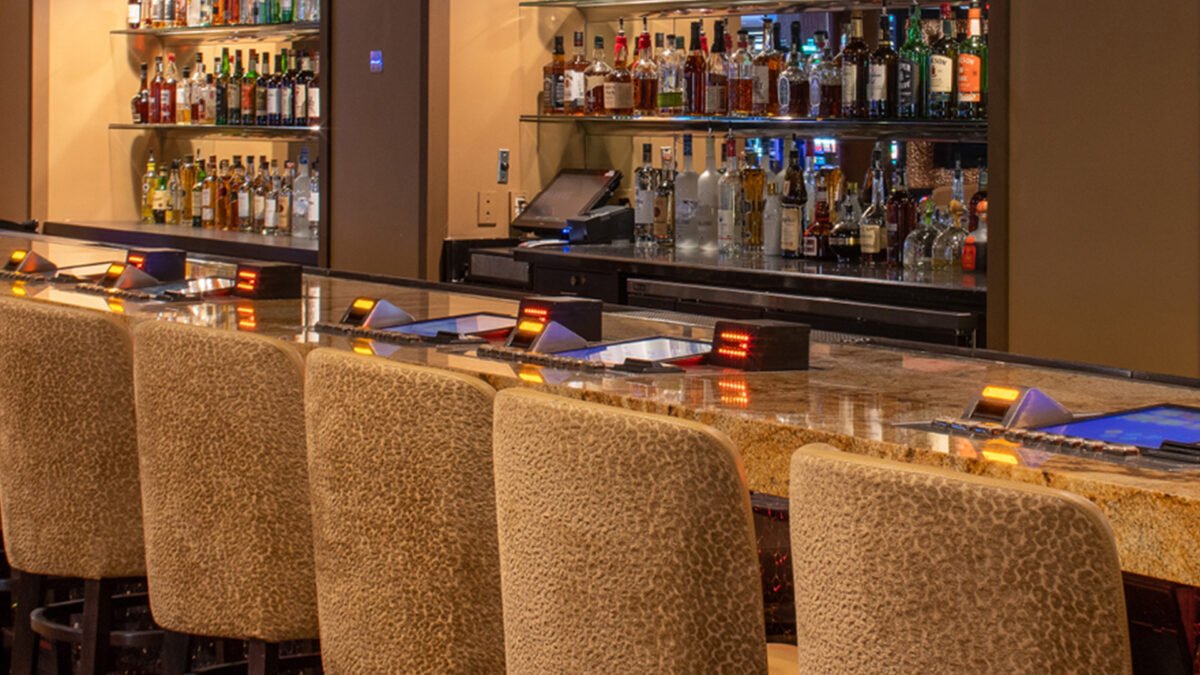
Today, the resort’s fully modernized Rush Lounge occupies this founding footprint, operating a contemporary cocktail bar equipped with over 20 high-definition screens to broadcast sports and major UFC events. Signature cocktails like Rush Punch and the Laughlin Lemonade anchor the drink menu alongside the sports-viewing setup. The current entertainment hub pairs its live weekend musical performances with comfortable, plush lounge seating situated right off the main casino floor. The casino floor beneath Rush Lounge has been in continuous use since the 1960s, even if nothing about the lounge itself looks that old, and that gap between site and surface is most of the reason Golden Nugget is worth the stop.
Best for early Laughlin casino history, modern sports-bar energy on the riverfront.
Planning Notes:
- Rush Lounge is open 24/7, adjacent to the casino floor and Race & Sportsbook, making it easy to combine during major sporting events.
- Free self-parking is available
- Live entertainment regularly scheduled on weekends; check ahead
- Don't expect a preserved historic interior; the significance is the site and lineage
- ADA Information: Accessible entrances, parking, seating, and restrooms
River Rick's Saloon at The New Pioneer
History: Opened in 1979 as the Colorado Club, the property was subsequently rebranded as the Pioneer Hotel & Gambling Hall under new ownership, becoming a sister property to the Pioneer Club in Las Vegas. In 1981, it added River Rick, a giant animated neon cowboy modeled closely on Vegas Vic, the famous sign at the Pioneer Club. The casino achieved a significant state milestone in 1986 by launching the very first slot-specific players club card program in Nevada.
Today, operating as The New Pioneer after a 2018 ownership change, the historic riverfront property preserves this early footprint through River Rick’s Saloon, a casual cocktail bar locally nicknamed “River Bar,” where nearly all 27 video poker machines face windows overlooking the Colorado River. Live weekend musical performances round out the atmosphere directly beneath the iconic neon cowboy landmark. A pedigree spanning decades and a neon landmark this recognizable are a rare pairing along the Riverwalk, which helps explain the bar’s enduring appeal.
Best for Old West atmosphere, historic neon, casual riverfront drinking.
Planning Notes:
- Saloon serves roughly 8 PM–midnight; casino open 24 hours
- Free self-parking is available
- Best viewed from the Riverwalk after dark, when River Rick is lit
- Live music on weekend evenings
- The Pioneer Country Store offers beer, wine, spirits, snacks, and souvenirs outside the saloon's operating hours
- ADA Information: Confirm access to River Rick's Saloon ahead of time
Regional Partners
See more of our local insights and trip-planning resources, or explore the official sites of our regional partners:
Adventure Photo Tours
Lorem ipsum dolor sit amet, consectetur adipiscing elit. Ut elit tellus, luctus nec ullamcorper mattis, pulvinar dapibus leo.